
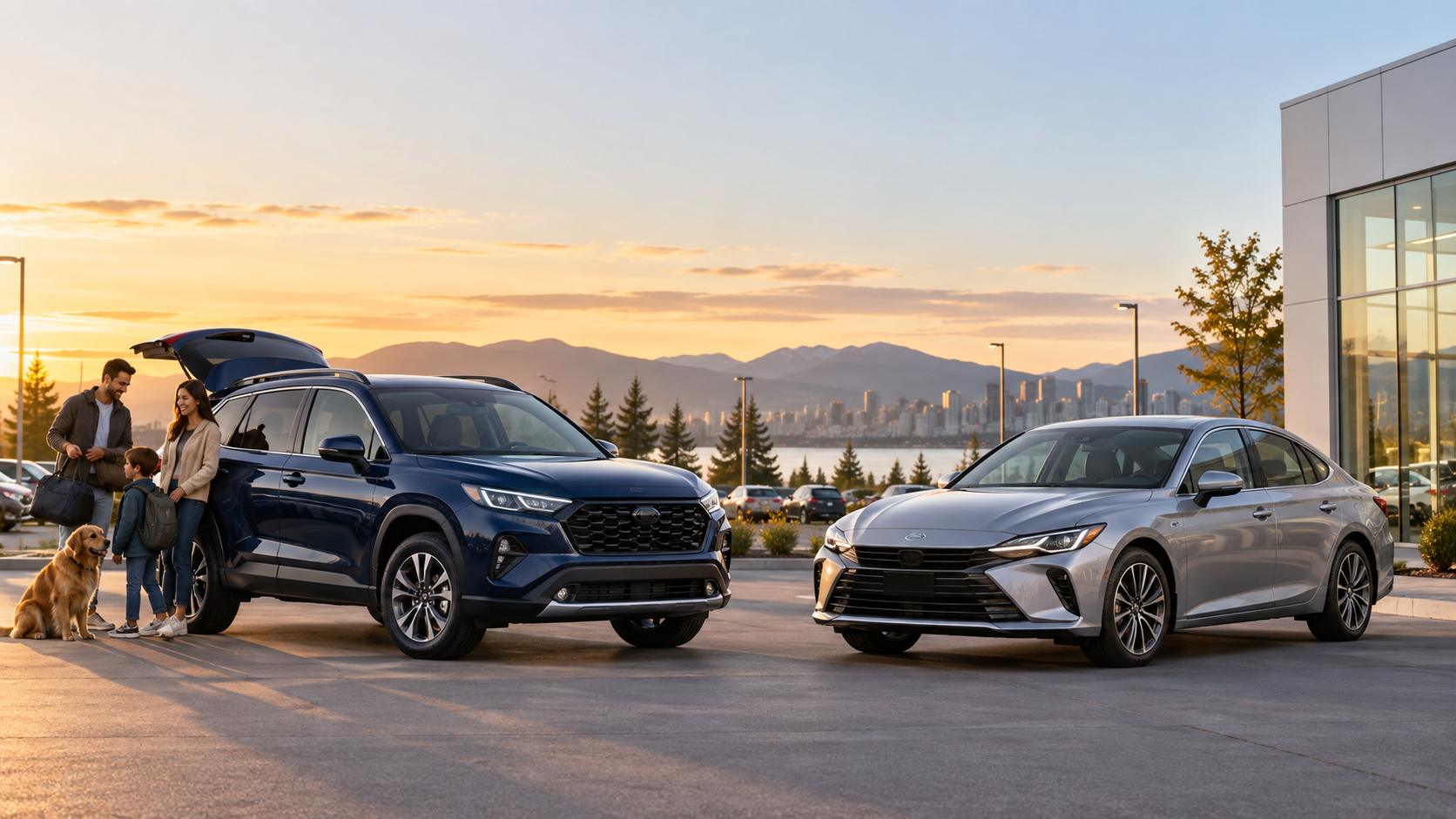
SUV vs Sedan: Which Is Right for You?
SUV or sedan? Compare space, running costs, comfort, and winter driving to find the right fit for your lifestyle and budget. When it comes to choosing your next vehicle, the SUV vs sedan debate isn't about which body style is objectively better—it's about which one fits your everyday life. From cargo space and running costs to winter performance and parking ease, the right choice depends on how, where, and what you drive. This guide breaks down the key differences so you can make a confident decision that suits your lifestyle and budget.
Your next vehicle should fit more than your budget. It should fit your parking space, your daily commute, your family, and the things you regularly carry.
For many used-car buyers, the choice comes down to an SUV or a sedan. Both can make excellent everyday vehicles, but each offers different advantages. Here’s how to decide which makes sense for you.
1. Space: Think About What You Actually Carry
SUVs generally offer a taller cargo area and a large rear opening, making it easier to load strollers, sports equipment, luggage and bulky purchases. Folding rear seats can create additional room when you need it.
Sedans have a separate trunk that keeps belongings out of sight. For groceries, school bags and the occasional weekend trip, that may be all the space you need.
However, a compact SUV isn’t automatically roomier than a midsize sedan. Rear legroom, seat width and usable cargo space vary considerably.
Before buying: Bring your stroller, car seats or regularly carried equipment to the viewing. A real-life fit test tells you more than a photograph.
2. Running Costs: Look Beyond the Asking Price
When comparing vehicles of similar age and condition, a smaller, lighter sedan will often use less fuel than a larger SUV. It may also have less expensive tires.
But the category alone doesn’t determine the cost. Engine size, drivetrain, wheel size, maintenance history and driving habits all matter. Insurance also varies by the specific vehicle and driver.
Compare the complete ownership cost:
Purchase price and financing costs
Fuel consumption
Insurance quotes
Tire replacement costs
Scheduled maintenance and upcoming repairs
A well-maintained SUV could be a better purchase than a neglected sedan, even if the sedan initially costs less.
3. Winter Driving: Tires Matter More Than Many Buyers Realize
Ontario winters often lead buyers straight to SUVs, especially models with all-wheel drive.
AWD can help a vehicle gain traction when accelerating on slippery surfaces. Some SUVs also provide useful ground clearance when travelling through deeper snow.
However, AWD does not automatically mean shorter stopping distances on ice. Suitable winter tires, vehicle condition and careful driving remain essential.
A sedan equipped with winter tires can be a practical winter vehicle for maintained city roads. If you regularly travel on rural roads or encounter deeper snow, an SUV’s additional clearance may be valuable.
Also, check the specific vehicle: not every SUV has AWD.
4. Comfort: Try Getting In, Not Just Sitting Down
An SUV’s higher seating position can offer a more elevated view of traffic. Some drivers also find its seat height easier for getting in and out or securing children in car seats.
Sedans sit lower and often feel more settled through corners. Many provide comfortable seating for longer commutes, although a low seat may be less convenient for someone with mobility concerns.
Neither body style guarantees comfort. Seat support, suspension, tire size and cabin noise make a difference.
During your test drive, include city streets, uneven pavement and a highway section where practical.
5. Parking and Everyday Convenience
If you frequently park in tight garages or busy shopping centres, pay close attention to the vehicle’s dimensions and visibility.
A compact sedan may be easier to manoeuvre than a large SUV. However, some compact SUVs are shorter than midsize sedans, so compare actual length and width rather than relying on the label.
Check whether the doors open comfortably in your usual parking space and whether you can easily see around the vehicle.
Which Should You Choose?
An SUV may suit you if you:
Regularly carry bulky items
Prefer a higher seating position
Need additional ground clearance
Find its seating height more accessible
A sedan may suit you if you:
Mainly commute or drive around town
Want to prioritise fuel and tire costs
Prefer a lower driving position
Have enough space in a conventional trunk
Buy for Your Everyday Life
Think about a normal week—not just the one trip you take each summer. The right vehicle should handle your regular needs comfortably while leaving room in your budget for ownership costs.
When buying used, the individual vehicle’s condition matters as much as its body style. Review its history, check maintenance records and arrange an independent inspection.
At Aston Auto Innovation, explore your options and find a vehicle that fits your everyday life.
Browse available inventory at astonautos.ca.
Shop Inventory
Find Your Next Vehicle